

The Ultimate Brochure Folding Guide: Z-Fold, Bi-Fold, or Tri-Fold?
The Architecture of Print Marketing
Even in a heavily digital marketing landscape, a beautifully printed brochure remains one of the highest-converting tools in your physical marketing arsenal. Whether you are handing them out at a trade show, leaving them behind after a B2B sales pitch, or mailing them directly to high-value clients, a physical brochure commands undivided attention.
However, before you even start worrying about typography and high-res imagery, you have to make a foundational architectural decision: How should it fold?
The fold of your brochure isn't just a manufacturing detail; it dictates how the reader consumes your information. Choosing the wrong fold can make your premium content feel cluttered and confusing. Choosing the right fold turns your brochure into a highly engaging, high-converting storytelling device.
Here is the ultimate guide to choosing between Z-Fold, Bi-Fold, and Tri-Fold formats for your custom Verveet corporate brochures.
1. The Bi-Fold: The Premium "Mini-Book"
How it works: A single sheet of paper folded squarely in half, creating four distinct panels (a front cover, a back cover, and two internal pages).
The Strategy: The bi-fold is the undisputed champion of the minimalist, premium aesthetic. Because you only have four panels, the internal spread is incredibly wide. This gives you the maximum amount of "white space" to work with, allowing your design to breathe.
Best Used For:
- High-Impact Imagery: If you are a luxury real estate agency, an interior designer, or a high-end product manufacturer, the bi-fold allows you to print massive, edge-to-edge, studio-quality photographs without a fold line cutting through the middle of the image.
- Simple Presentations: When your pitch is concise and relies heavily on a clean, pro-level visual presentation rather than dense paragraphs of text.
- Menus & Pricing Guides: It reads exactly like a traditional book or menu, making it instantly intuitive for the user.
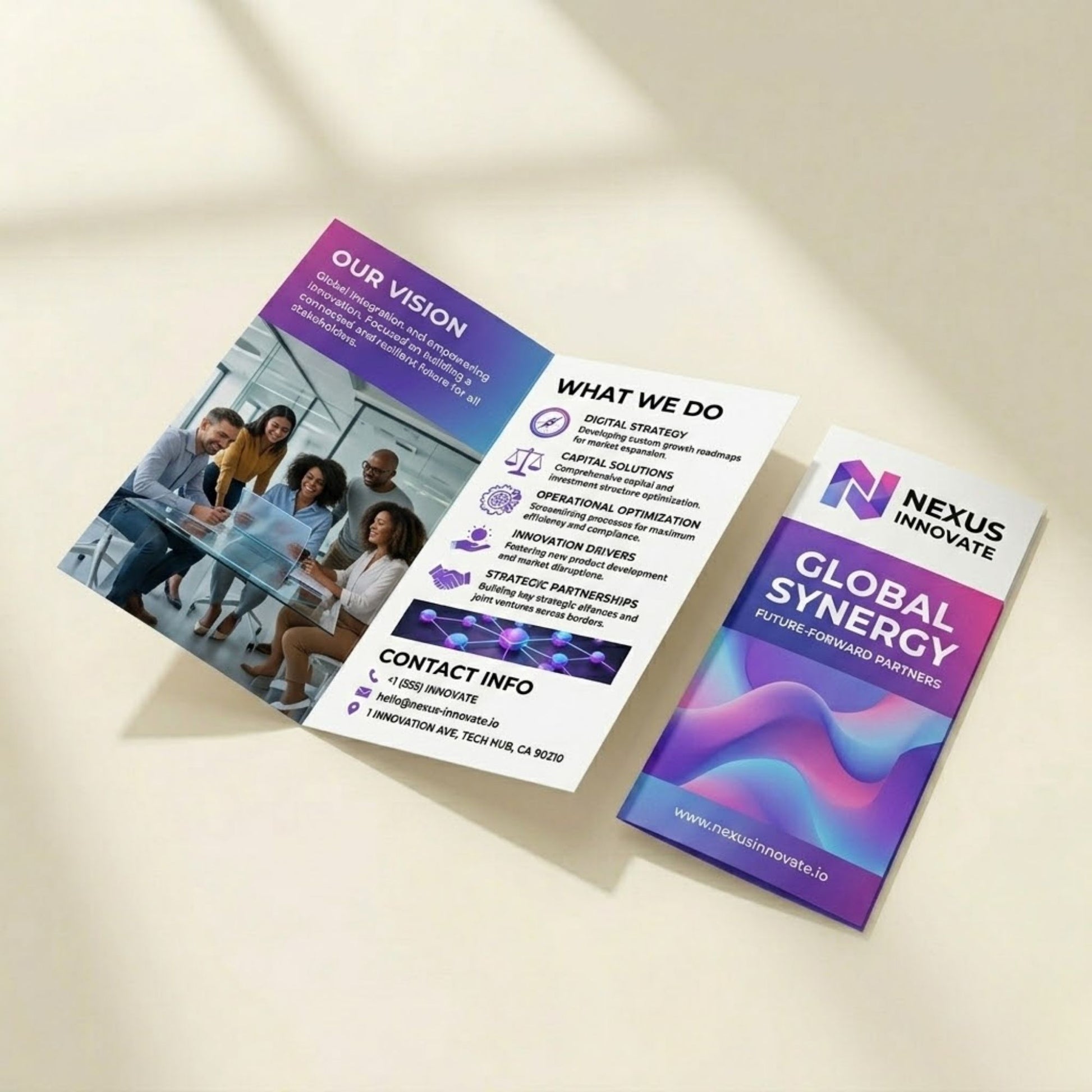
2. The Tri-Fold: The High-Converting Classic
How it works: The paper is folded twice, with the right panel folding inward first, and the left panel folding over it. This creates six distinct panels.
The Strategy: The tri-fold is the most popular corporate brochure format in the world for a reason - it is a masterclass in information pacing. It naturally forces you to break your marketing copy into easily digestible, bite-sized sections. As the reader opens the first flap, they get a teaser; opening the second flap reveals the core offering.
Best Used For:
- Service Breakdowns: Perfect for B2B consultants, healthcare clinics, and tech startups who need to explain step-by-step processes, list multiple services, or feature a heavily structured FAQ section.
- Direct Mailers: The compact, folded size fits perfectly into standard business envelopes.
- Trade Show Racks: They stand up perfectly in display racks and have a narrow front cover that forces you to use punchy, high-converting headlines to grab attention.

3. The Z-Fold: The Dramatic Reveal
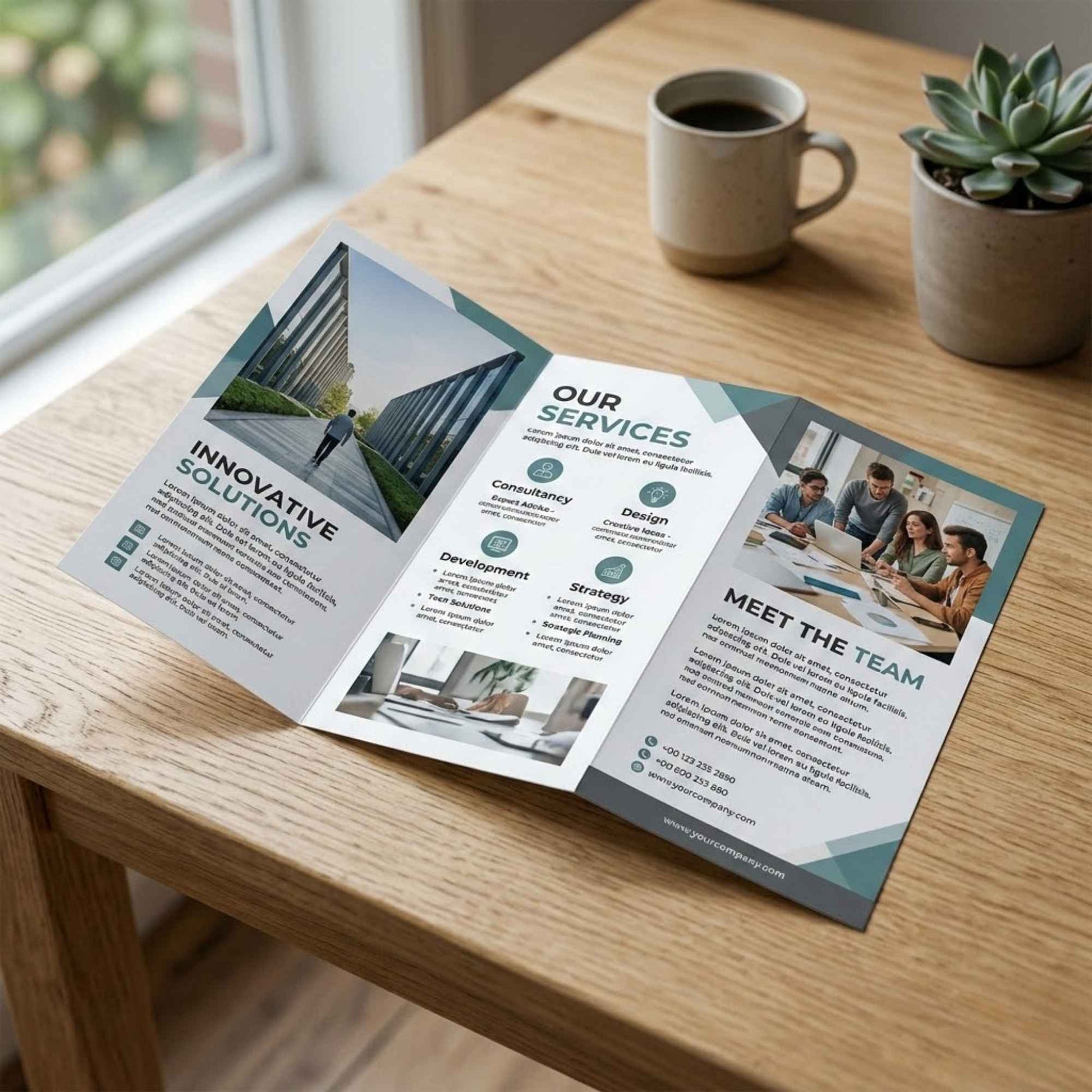
How it works: Folded twice in opposite directions, creating an accordion-like "Z" shape. It also yields six panels.
The Strategy: While it looks similar to a tri-fold when closed, the Z-fold opens completely differently. Instead of opening like a book, it pulls open all at once. This creates a massive, continuous three-panel spread on one side of the paper. It is a highly interactive format that invites the reader to physically stretch the document out.
Best Used For:
- Chronological Storytelling: Ideal for timelines, historical company overviews, or step-by-step visual guides that need to be read sequentially from left to right.
- Spanning Graphics: If you have a wide, panoramic photograph, a sprawling architectural diagram, or a massive infographic that needs to stretch across the entire width of the page, the Z-fold allows the user to lay it flat and view the big picture.
- Bilingual Content: You can put English on one side of the accordion and a second language on the reverse, keeping the two completely separate but easily accessible.
Elevating Your Print Quality with Verveet
Once you have chosen the perfect architecture for your content, the final step is ensuring the physical product feels as premium as your design looks.
At Verveet, we ensure your brochures are printed on heavy, professional-grade paper stock so they never feel flimsy in your client's hands.
- Go Glossy: If your bi-fold or Z-fold relies on vibrant, high-contrast product photography, a glossy finish will make those images pop with incredible clarity.
- Go Matte: If your tri-fold is text-heavy and aims for a sleek, modern, and serious corporate tone, a smooth matte finish eliminates glare and ensures effortless readability.
 Don't let a great marketing campaign fall flat because of the wrong layout. By matching your content strategy to the correct fold, you create a seamless, engaging experience that guides your prospect directly to the final call to action.